
Custom WooCommerce Plugin Development for Comgraphx
A Myers Marketing Management Case Study
Executive Summary
Every business develops processes that make sense for the way it serves its customers. The challenge comes when those processes no longer fit within the limitations of standard software.
Comgraphx, a Tulsa-based print and graphics company specializing in custom die-cut stickers, reached that point with its WooCommerce website. The company had implemented a product customization system that allowed customers to design and order stickers online, but the pricing and fulfillment requirements of the business exceeded what WooCommerce could handle out of the box.
What appeared at first to be a pricing issue quickly revealed several interconnected operational problems involving product creation, order processing, and shipping.
Myers Marketing Management was brought in to evaluate the situation and develop a custom solution that would allow Comgraphx to continue operating within its existing website while solving the underlying issues.
The result was a custom WordPress plugin that automated pricing calculations, prevented duplicate product records, improved fulfillment workflows, and provided a scalable framework for future growth.
Company Background
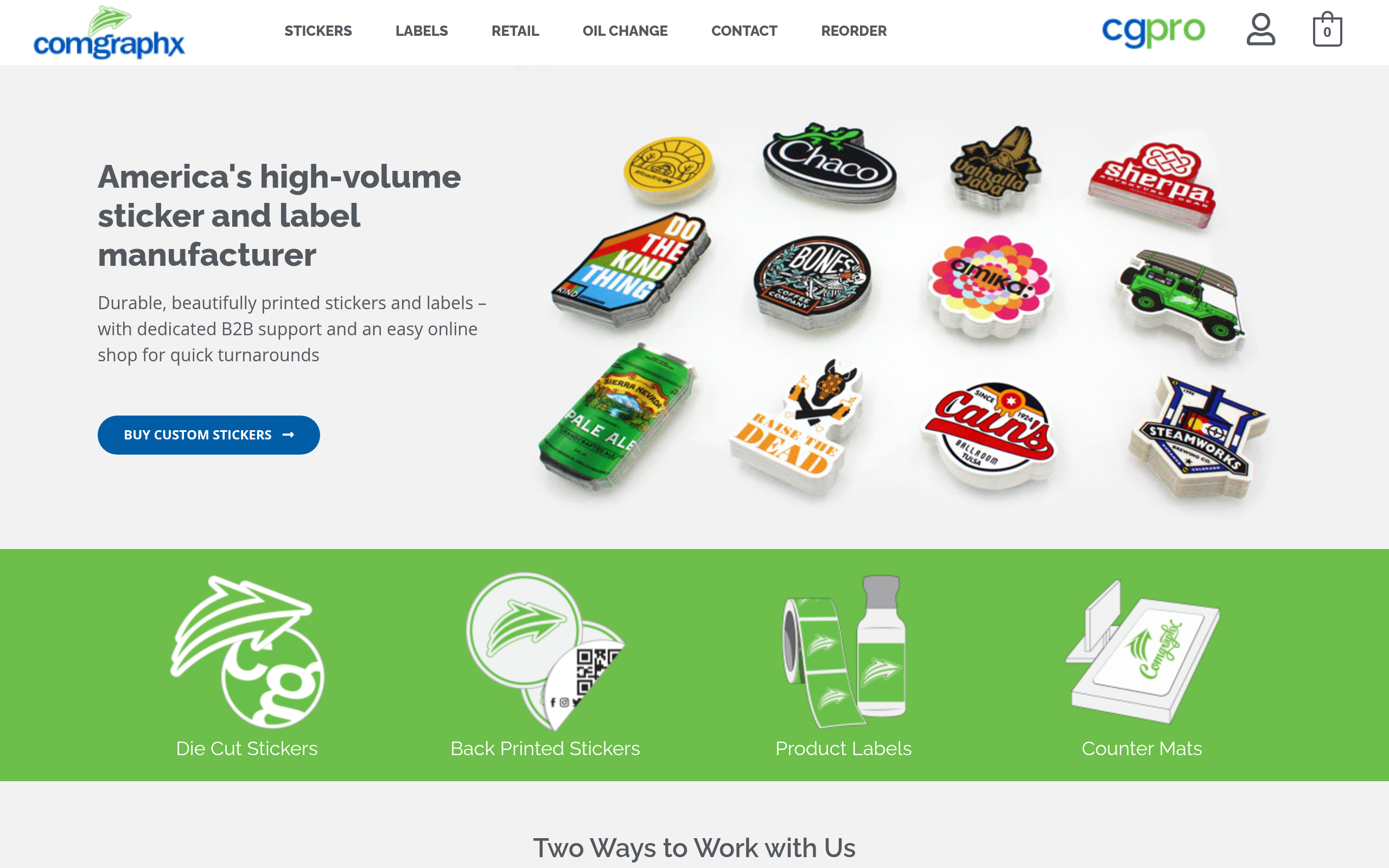
Comgraphx specializes in custom-produced stickers that vary based on size, quantity, material, and finishing options. Unlike a traditional e-commerce store where products have fixed prices, each order is generated dynamically based on customer selections.
The company’s existing graphics customization software successfully calculated total project pricing. However, WooCommerce was not designed to interpret that information correctly when customers moved from product customization into the shopping cart and checkout process.
As order volume increased, the limitations of the system became more noticeable and began creating operational inefficiencies.
The Challenge
Pricing Calculations
The most immediate problem involved pricing.
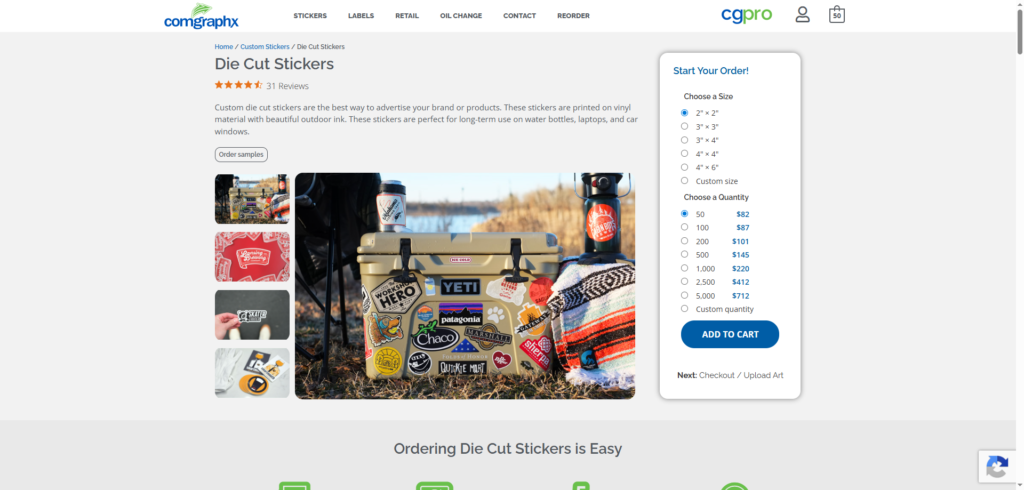
The graphics customization software generated a total project price for an order. WooCommerce, however, expects a unit price and then multiplies that amount by the quantity ordered.
For example, if a customer ordered 100 stickers and the graphics software returned a total project cost of $50, WooCommerce interpreted the price as $50 per sticker. Instead of charging $50 for the entire order, the system attempted to charge $5,000.
This created a disconnect between the customization software and WooCommerce’s pricing engine.
Duplicate Product Records
A second issue involved how custom products were stored.
Each time a customer created a custom sticker configuration, WooCommerce generated a new product record. The system made no attempt to determine whether an identical configuration already existed.
Over time, this behavior caused the product database to grow unnecessarily. Product management became more difficult, reporting became less reliable, and administrative overhead increased.
Shipping and Fulfillment
The third issue surfaced during fulfillment.
Comgraphx needed the ability to process custom orders that might require multiple packages or separate shipments. The way custom products were being generated and grouped inside WooCommerce made it difficult to calculate shipping accurately and organize orders for fulfillment.
While each issue could have been addressed independently, all three problems were connected and required a unified solution.
Evaluation and Planning
After reviewing the website architecture and existing plugin stack, Myers Marketing Management determined that no available WooCommerce extension would solve all of the required business needs.
The project required custom business logic that could communicate directly with both WooCommerce and the graphics customization system.
The objective was not simply to fix pricing. The goal was to create a long-term solution that would fit naturally within Comgraphx’s existing workflow and support future growth.
Development Approach
A custom WordPress plugin was designed and developed specifically for Comgraphx.
The plugin focused on three primary functions.
Product Deduplication
The first component addressed duplicate product creation.
Whenever a custom product is generated, the plugin evaluates its configuration and compares it against existing records. If an identical configuration already exists, the existing record is reused rather than creating a duplicate.
If no match exists, a new product is created and stored for future use.
This process significantly reduces unnecessary database growth while maintaining flexibility for new custom orders.
Per-Unit Price Conversion
The second component addressed pricing.
The plugin intercepts pricing information before it reaches WooCommerce. It takes the total project cost generated by the graphics customization software and divides that amount by the quantity ordered.
The resulting per-unit price is then passed into WooCommerce, allowing the platform to perform its standard calculations correctly.
For example:
Quantity Ordered: 100
Project Total: $50
Calculated Unit Price: $0.50
WooCommerce then multiplies $0.50 by 100 and arrives at the correct order total of $50.
This approach allowed the existing graphics software to remain unchanged while making WooCommerce behave as intended.
Individual Item Cart Management
The final component focused on fulfillment and shipping.
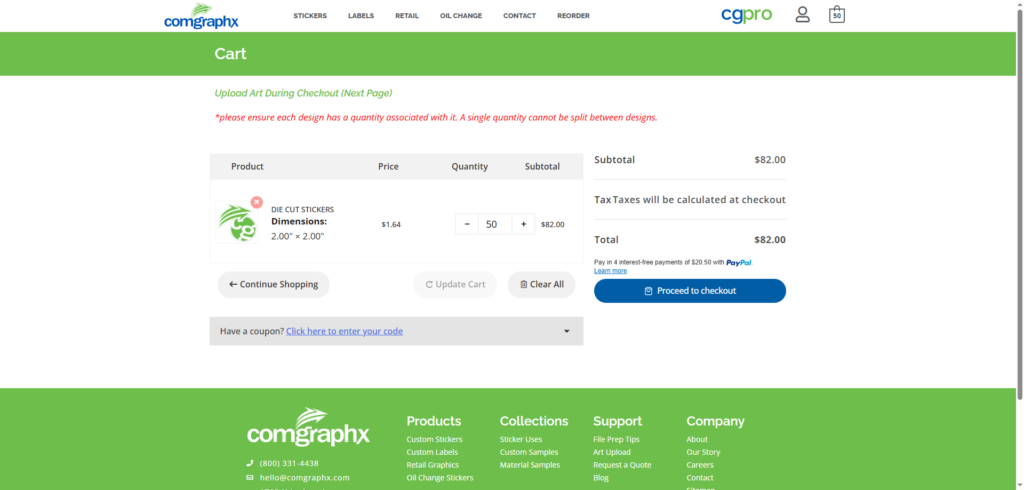
Instead of treating custom sticker orders as a single grouped item, the plugin structures the cart so that individual sticker products can be managed separately when necessary.
This provides greater visibility during fulfillment and allows shipping calculations to be handled more accurately. It also creates the flexibility needed for orders that require multiple packages or separate shipments.
Development Timeline
November 2025
Initial planning and development began.
Because the website was actively processing customer orders, implementation planning focused heavily on minimizing disruption. A maintenance window was scheduled during early morning hours to allow development and testing activities to occur outside of peak business operations.
December 2025
A staging environment was established and the first deployment tests were conducted.
While testing in staging was successful, a pricing issue appeared during live environment validation that had not surfaced in development. Rather than moving forward with an incomplete solution, the issue was documented, communicated to the client, and additional development time was scheduled.
The client was kept informed throughout the process, and a revised deployment timeline was established.
January and February 2026
Additional testing and refinement were completed.
Pricing calculations were compared directly against Comgraphx’s internal Excel pricing sheets to ensure accuracy. Multiple order scenarios were tested to verify consistent behavior across product creation, cart processing, and shipping workflows.
February 24, 2026
The custom plugin was deployed to the production environment.
Final validation confirmed that pricing calculations matched expected outputs, duplicate product creation had been eliminated, and fulfillment workflows were functioning correctly.
Documentation and screenshots were provided to the project stakeholders following launch.
Results
The completed solution provided immediate operational improvements.
Pricing calculations became consistent and reliable across all custom sticker orders.
Duplicate product creation was eliminated, resulting in a cleaner and more manageable WooCommerce database.
Shipping and fulfillment workflows became more flexible and easier to manage.
Administrative overhead was reduced because staff no longer needed to manually correct pricing discrepancies or manage excessive product records.
Most importantly, Comgraphx was able to continue operating within its existing website without changing the way it serves customers.
Deliverables
The project included:
-
- Custom WooCommerce plugin development
-
- Product deduplication functionality
-
- Dynamic pricing calculation logic
-
- Cart and fulfillment enhancements
-
- Multi-package shipping support
-
- Administrative product management tools
-
- Testing and validation procedures
-
- Deployment assistance
-
- Technical documentation
Conclusion
The Comgraphx project is a good example of a challenge that many growing businesses eventually face. Standard software platforms are designed to solve common problems, but not every business operates in a standard way.
Comgraphx had developed a successful process for selling highly customized products online. The obstacle was not the business model. The obstacle was finding software capable of supporting it.
Rather than forcing the business to change its workflow, Myers Marketing Management developed a custom solution that fit the way the company already operated.
The result was a more reliable ordering system, a cleaner administrative process, and a platform capable of supporting future growth without adding complexity for customers or staff.